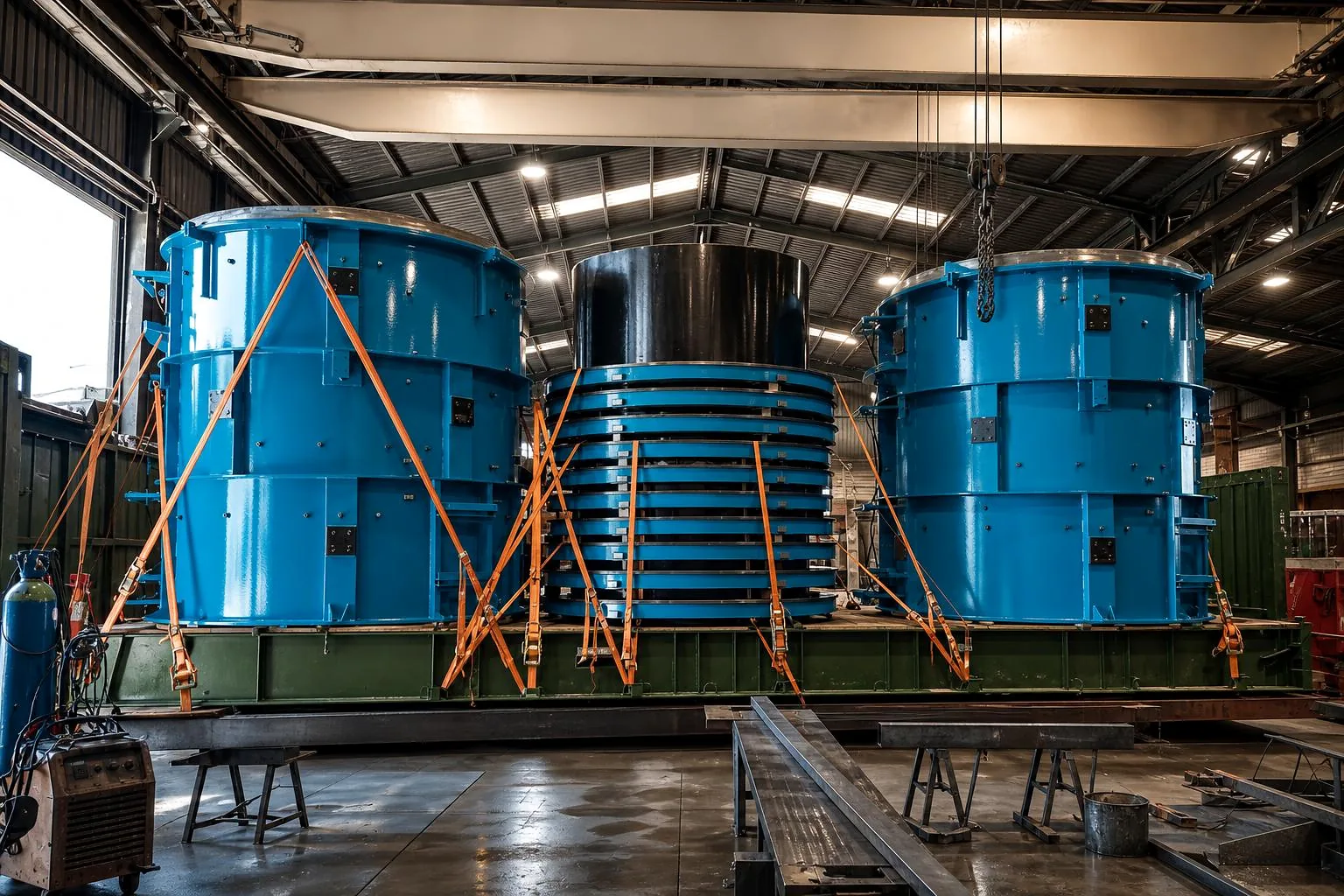
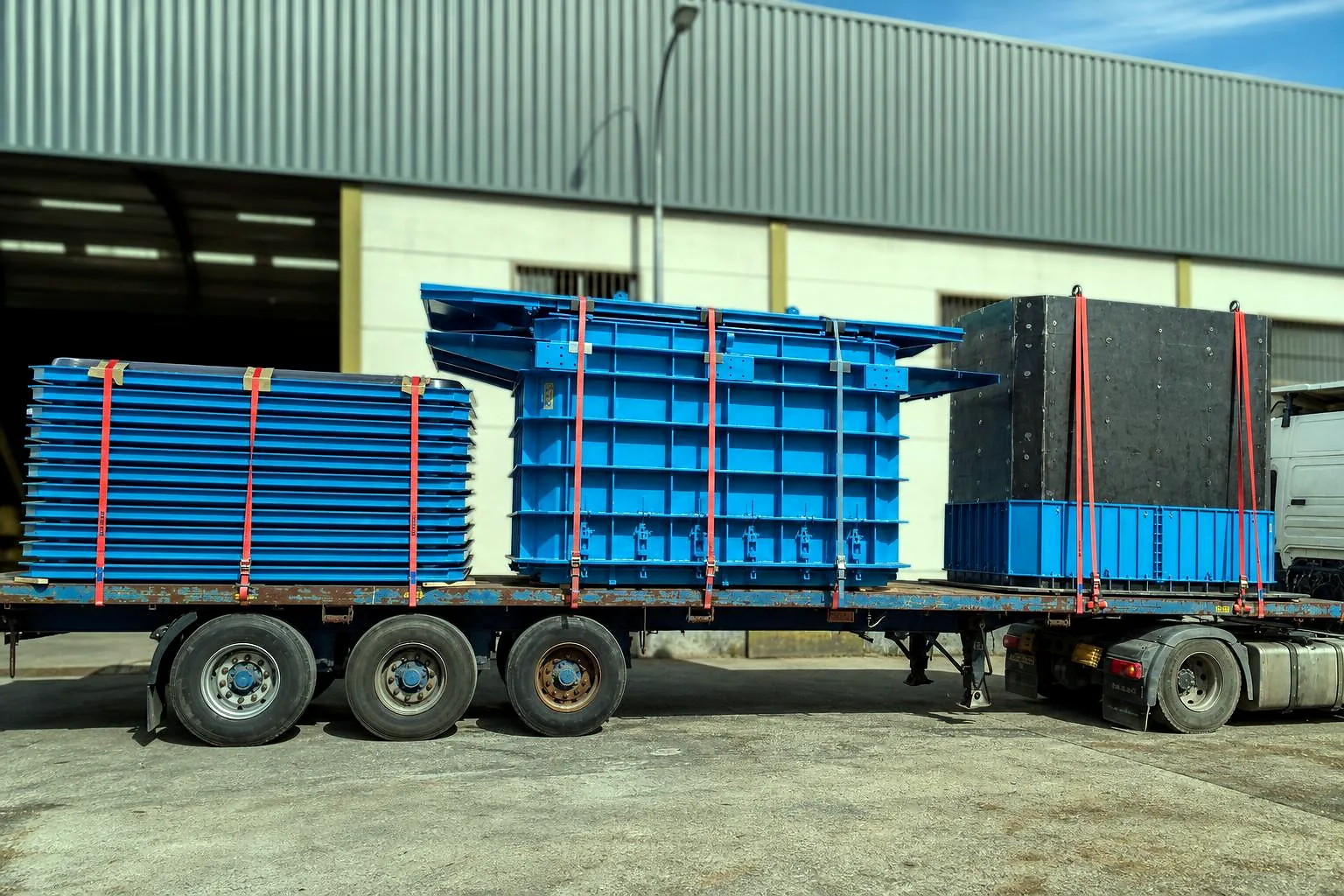
Jacking pipe mould with core and rings prepared for transport
Product · Precast moulds

Jacking pipe moulds

Custom-made steel moulds for producing concrete jacking pipes with stable geometry, secure closing and cleaner demoulding cycles. Designed to work with precision, strength and production continuity.

Design from drawing or technical sampleAdapted cores, rings, jackets and supportsRobust manufacturing for industrial repetition
Product and manufacturing

Moulds prepared for demanding cycles.

Each assembly is manufactured to respond to a specific production need: stable geometry, safe handling, controlled compaction and clean demoulding.
What it is · What it includes · What it is for

The assembly understood as a working piece.

The important thing is not to list components as another specification sheet. Here the focus is how core, shell, table, rings and closures relate so the pipe comes out with accurate dimensions, stability and controlled demoulding.

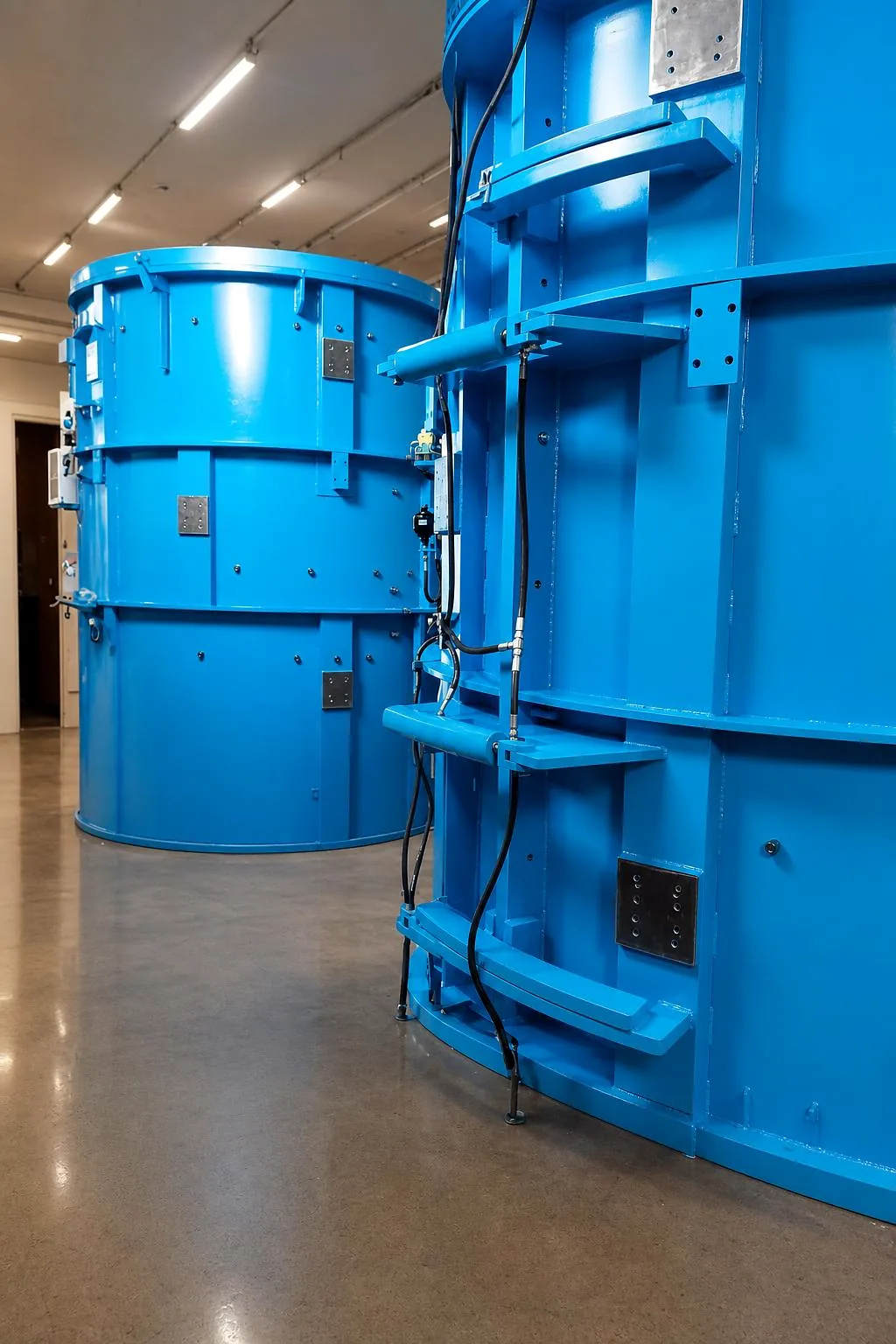
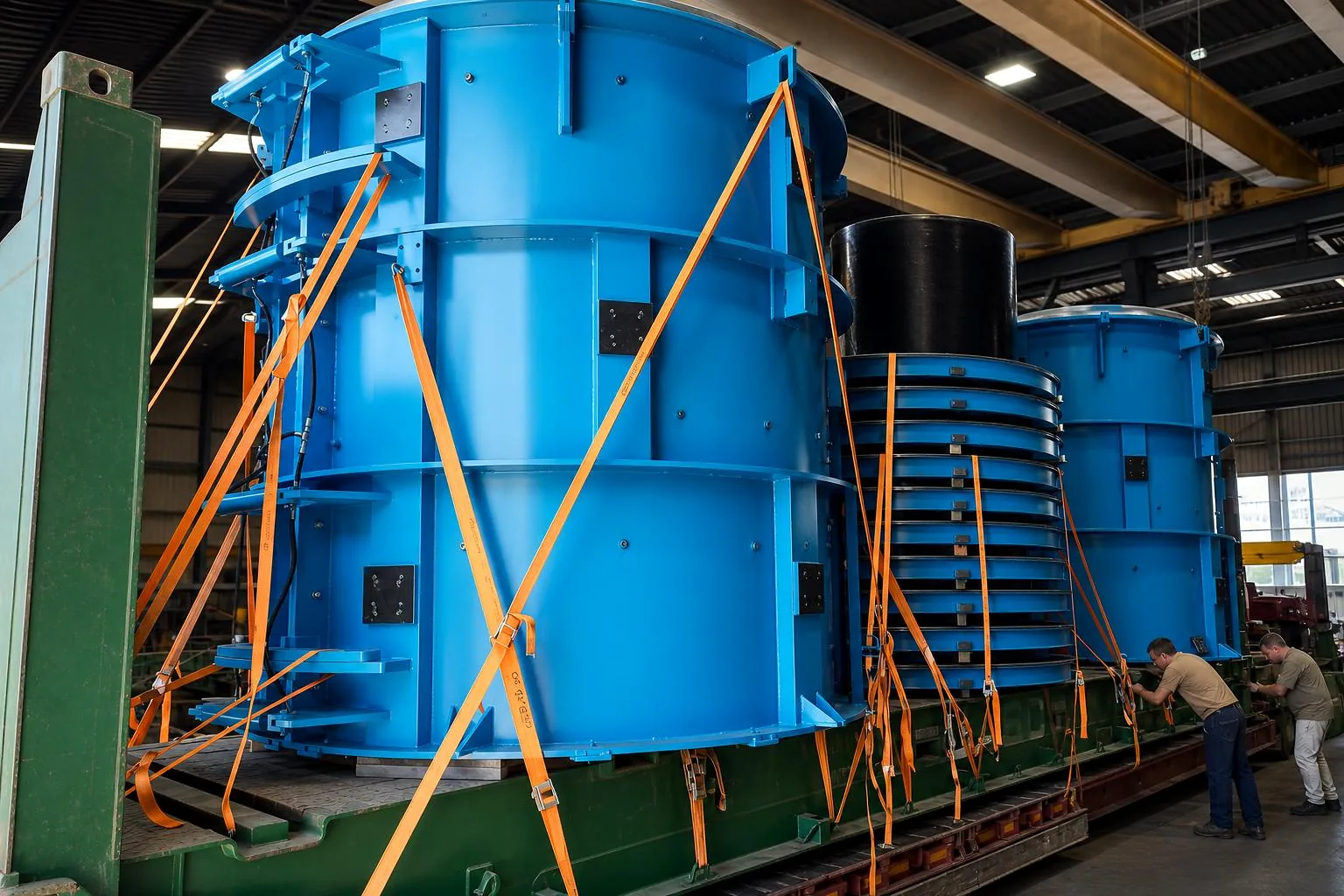
Jacking pipe mould with core and rings prepared
Assembly view

Mould, core and rings working as a system.

The assembly defines internal and external geometry, supports casting, maintains stability and allows opening or extraction without damaging the part.

01

Core / inner core

Removable element that defines the pipe’s internal diameter and conditions demoulding.

Interior
02

Shell

External structure that gives the cylindrical shape and allows controlled opening of the mould.

Exterior
03

Table and supports

Base, rings and supports distribute weight, stabilise the assembly and facilitate handling.

Stability
04

Closures and opening

Mechanical or hydraulic systems that join, lock and release the assembly with precision.

Cycle
05

Project adaptation

Dimensions, thicknesses and handling are adjusted to drawings, workshop and real production conditions.

Custom-made
StrengthPrepared for demanding manufacturing cycles.
DemouldingCleaner opening and lower risk for the part.
ProductivityLess downtime in each work cycle.
Specifications

Manufacturing specifications.

Each mould is defined according to drawing, sample or production need. Dimensions, component assembly, handling, supports, closures and finish are reviewed before manufacturing.

Geometry

Diameter, length and configuration according to drawing, sample or production need.

Mould assembly

Internal core, jackets, rings, closures, supports and handling elements defined by real use.

Manufacturing

Reinforced steel structure to control deformation, opening and closing.

Finish

Surface protection, industrial paint and preparation for transport or assembly.

Control

Review of fits, access, lifting points and critical areas before delivery.

Adaptation

Repair, modification or evolution of existing moulds when the project requires it.

Process

From drawing to operating mould.

The process combines technical reading, steel manufacturing and final adjustment so the mould arrives ready to work in real production cycles.

01

Technical reading

Dimensions, intended use, available machinery and handling constraints are reviewed.

02

Assembly design

How the core, rings and jackets open, close, support and are handled is defined.

03

Manufacturing and adjustment

The workshop resolves welding, rigidity, finish and working points before delivery.

Industrial detail of a Relente product
Workshop judgement

Manufactured for real workshop work.

Closures and supports designed for repetition, not just for a single isolated part.

Attention to deformation, demoulding, maintenance and safe handling.

Possibility of working from a drawing, existing part or already detected production problem.
Related products

We also manufacture.

Other Relente manufacturing lines for precast concrete and deep drilling.

Do you need a jacking pipe mould?

Send us drawings, dimensions or photographs of the mould you need to manufacture, adapt or repair. We review the case and guide you with technical judgement.

Custom manufacturing

Moulds for dry-cast concrete jacking pipes.

We design and manufacture jacking pipe moulds for dry-cast concrete and concrete pipes, with stable diameter, defined ends, clean thrust faces and an opening system designed to repeat production cycles without punishing the workshop.

jacking pipeconcrete pipedry-cast concretecore and shellbell and spigot
01

Need to manufacture jacking pipes.

When the manufacturer needs to produce pipes for trenchless installation, the mould must help control diameter, length, thicknesses, joint housing and thrust faces.

02

Opening, closing or demoulding problems.

Many enquiries arise from wear, deformation, awkward closures, slow extraction or parts that do not come out clean. In those cases, assembly design matters more than the material itself.

03

Adaptation to diameter, joint and thrust faces.

A standard pipe is not the same as a series with ferrule, rubber gasket, thrust ring, spigot/bell or jobsite dimensional requirements.

04

Repair or evolve an existing mould.

It can also start from a mould already in use: core, shell, supports, rings, reinforcement and handling are reviewed to extend service life or improve production.

What a jacking pipe mould must solve.

The jacking pipe works in a demanding installation: it receives thrust during execution, must maintain alignment and needs well-resolved ends. That is why the mould is designed from the final part and the full manufacturing cycle, not only from an external dimension.

Core, shell and rings.

The core defines the interior; the shell controls the exterior; rings and auxiliary tooling condition the ends, joint and repeatability between cycles.

Dimensional control.

Diameter, thickness, length, taper, support and tolerances must be maintained even when the mould undergoes vibration, handling, cleaning and continued use.

Production cycle.

A good mould does more than shape the part: it must open and close safely, allow concrete casting, facilitate extraction, reduce downtime and withstand real maintenance.

When it makes sense to manufacture a specific mould.

A jacking mould should not be treated as a generic shell. Pipe geometry, thrust, handling and production pace require the complete assembly to be designed with workshop judgement.

Manufacturing concrete jacking pipes

To produce a specific horizontal jacking pipe, the mould must control diameter, length, thickness, ends and bearing surfaces with repeatability.

Steel mould for concrete jacking pipe

For a concrete jacking pipe, the assembly must resolve shell, core, closures, rings and demoulding without losing stability during continuous work.

Ends, joint and thrust faces

The pipe ends, joint housing, support, thrust ring and load distribution are areas where the mould must maintain precision.

Demoulding jacking pipes

When the problem is extraction, adhesion, deformation or jacking pipe finish, geometry, opening system, supports and work sequence must be reviewed.

Core and shell for jacking pipe

Interior, exterior, shell, core, rings and auxiliary tooling define the real pipe geometry and condition clean demoulding.

Repair of jacking pipe moulds

Specific case when the jacking mould already exists but has play, worn closures, deformation, wear or handling problems.

Useful data before requesting the mould.

The clearer the part and process are, the more precise the technical proposal can be.

Part dimensionsInternal and external diameter, length, thickness, end geometry and relevant tolerances.
Pipe endsGasket, ferrule, thrust ring, thrust faces or any configuration affecting support and fit between pipes.
Workshop processCasting method, vibration, handling, curing, production pace and available means for opening or extraction.
Intended useCivil works, sanitation, drainage, crossings under infrastructure, horizontal thrust or special installation conditions.

Frequently asked questions about jacking pipe moulds.

Useful information to prepare dimensions, drawings, photos of the existing mould or data about the pipe to be manufactured.

What is the difference between a jacking pipe mould and a conventional pipe mould?

The jacking pipe must withstand thrust forces and maintain geometry in a trenchless installation. The mould requires more attention to ends, bearing faces, joint, load distribution and dimensional repeatability.

Can a mould be manufactured for special diameters or lengths?

Yes. The starting point is the jacking pipe dimensions, thickness, joint type, end geometry, thrust faces, manufacturing process and production pace.

Which parts of the mould are critical for good demoulding?

Core, shell, closures, rings, supports, tapers, contact surfaces and opening sequence. If one of these parts is not properly resolved, the cycle slows down or the part may come out with defects.

Can you start from an existing mould to improve it?

It can be studied. If the mould already works but causes problems, deformation, play, wear, closing, handling, rigidity and real adaptation possibilities are reviewed without compromising the part.

What documentation should be sent to assess the project?

Drawings, dimensions, photos of the mould or part, diameter, length, joint type, production system, current issues and objective: manufacture from scratch, repair, adapt or increase performance.