
The profitability of a precast concrete plant depends directly on its production cycle. For large-scale items, such as manholes, pits, and box culverts, the most critical phase is demoulding. A poor specification when ordering custom moulds for precast concrete can result in steel equipment that causes grout leaks, defective on-site fittings, or pieces that fracture upon extraction.
For production managers, purchasing heads, and technical directors, the acquisition of heavy capital equipment represents a high investment that requires precision from the very first email. This article serves as a preventive guide to identify and avoid technical and logistical communication failures between the site engineering office and the metal fabrication workshop responsible for manufacturing the mould.
Why a Poorly Specified Mould Paralyses Your Precast Production
The main problem in the heavy precast concrete industry is not the quality of the concrete itself, but the geometry and repeatability enabled by the steel formwork. When a client decides to order a mould without exhaustively detailing their plant’s actual operations, they are exposed to considerable delays. A mould that does not square up, requires excessive force to open, or yields to hydrostatic pressure, interrupts the production chain, increases man-hours per piece, and, in the worst-case scenario, generates quality rejections in civil engineering works.
Properly addressing the procurement and specification phase is just as vital as the subsequent engineering design. Differences between what the buyer envisions and what the metal fabricator interprets must be reduced to zero before accepting a quote.
Types of Solutions: Standard, Modular, and Custom Geometric Manufacturing
Before delving into the mistakes, it is necessary to understand the options that the B2B market usually considers when the need to produce a new series of concrete pieces arises:
- Standard moulds: Pre-designed equipment for highly commercialised dimensions. They are economical and quick to procure, but force the end client to adapt their project to the precast piece.
- Adaptable modular moulds: Panel systems assembled to create different volumes. Although they seem versatile, they feature mechanical joints that suffer wear, encourage leaks, and rarely achieve perfect surface finishes without manual rework.
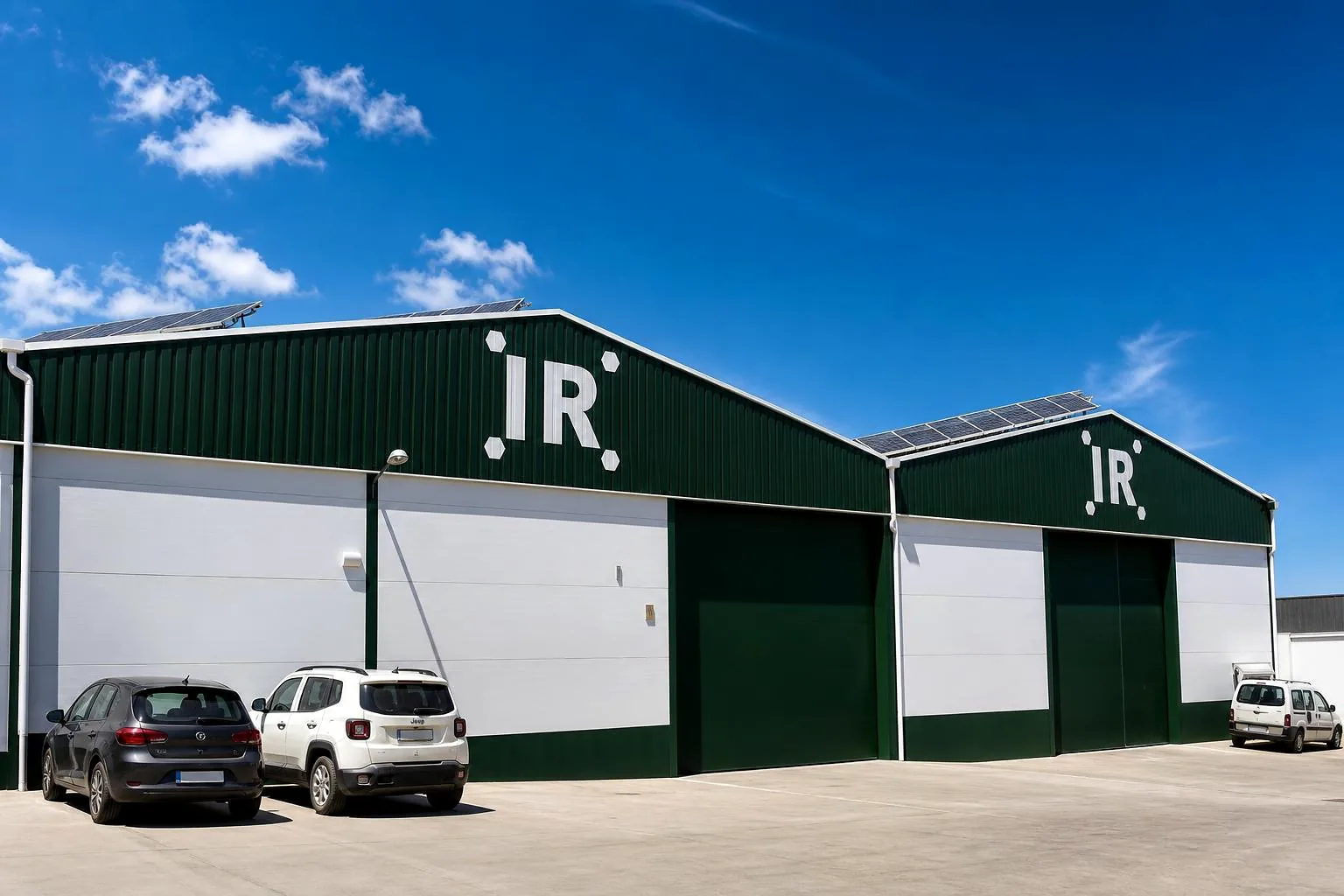
- Purely custom moulds: Equipment manufactured from scratch based on the exact drawings of the required piece. This is where Industrias Relente adds differential value, building the exact steel negative so that the piece fits perfectly into the trench the first time.
The 5 Most Costly Mistakes When Ordering Custom Moulds for Precast Concrete
Experience analysing hundreds of industrial quote requests shows that most cost overruns stem from omissions in the initial enquiry. Below, we detail the five most critical mistakes.
1. Opting for adapted modular solutions instead of 100% custom geometry
One of the most common errors made in an attempt to reduce initial investment is requesting a modular mould with the hope that it will serve multiple projects with slight geometric variations. The operational reality is that adapting a standard mould for a specific pit ends up being more expensive. Modular systems have joints that, after several vibration cycles, tend to misalign.
This causes fine grout to leak, which generates honeycombing in the concrete and burrs that must be hand-polished (a massive hidden cost). The advantage of custom manufacturing is that the piece does not have to be adapted to the mould: it is manufactured directly for the required geometry, guaranteeing watertightness and a continuous surface finish.
2. Failing to detail the plant’s demoulding kinematics and manoeuvres
A mould is not just a static steel box; it is a passive machine that must be operated. Many buyers only send the drawing of the concrete piece, forgetting to explain how their plant operates. If the workshop is unaware of the required demoulding kinematics, it may manufacture a robust but inoperable mould.
It is crucial to inform the manufacturer about: available factory floor space for opening the side panels (hinges vs. sliding on rails), the maximum load capacity of the overhead cranes, preferred lifting points, and whether demoulding will be done in the casting position or requires tilting. Ignoring the client’s actual manoeuvring capabilities results in moulds that slow down daily production cycles.
3. Omitting draft angles and tolerances in the base drawings
Concrete shrinks as it cures. Furthermore, during the extraction of inner cores, a strong vacuum effect and high mechanical friction are generated. If the drawings sent by the client do not originally include the necessary draft angles (taper), the piece simply will not come out of the mould, or it will require traction forces that will damage the fresh concrete.
Additionally, it is necessary to align expectations regarding acceptable dimensional tolerances for pipe jacking or precast frames. A strict tolerance of ±1 mm requires subsequent machining processes in heavy metal fabrication, increasing the budget. If the site allows ±5 mm, the steel fabricator needs to know to optimise welding and assembly costs.
4. Underestimating the required rigidity against hydrostatic pressure
Modern concrete, especially self-compacting concrete (SCC), exerts enormous hydrostatic pressure against the mould walls, similar to a dense liquid. In the search for “cheaper options”, some buyers request a reduction in steel plate thickness or the number of reinforcement profiles.
Skimping on the structural rigidity of the steel inevitably leads to deformation or “bulging” in the precast pieces, which in turn causes fitting problems on the civil works site. To fully understand how this resistance is calculated, we recommend consulting our detailed design criteria for custom precast moulds.
5. Technical disconnect between the site office and the steelworks facility
The civil engineer designs the concrete piece thinking about ground loads and hydraulic flows. The mechanical engineer designs the mould thinking about technical shrinkage, welding, plate thickness, and kinematics. Sending a civil drawing of a manhole directly to a workshop without a technical translation phase is a fatal error.
The buyer must ensure their supplier is capable of reverse engineering. It is not just about pricing kilos of steel, but proposing quick-release closing solutions, watertightness, and ergonomics. Working with specialised companies, true industrial metal fabrication manufacturers, ensures that the transition from the concrete drawing to the steel plan (negative) is flawless.
Essential Technical Data Required to Request a Quote
To streamline the process and obtain real, accurate quotes (without risk buffers for uncertainty), the buyer must prepare the following information package:
- Drawings of the finished concrete piece (in CAD or dimensioned PDF).
- Estimated volume and weight of the finished piece.
- Type of concrete to be used (fluid, dry, self-compacting) and vibration type (external attached to the mould, internal poker vibrators, or vibrating tables).
- Maximum lifting capacity of the plant’s cranes.
- Expected production (number of daily pieces) to determine if accelerated curing or quick demoulding systems are required.
- Aesthetic requirements for the surface finish.
When is Manufacturing a Custom Mould Worth the Investment?
The economic balance quickly tips towards custom moulds when dealing with serious infrastructure projects (tunnels, large-flow pipelines, service galleries). At Industrias Relente, we know that manufacturing to measure based on the client’s drawings, dimensions, manoeuvres, and actual conditions results in a product that accelerates production start-up.
Instead of wasting weeks trying to seal a generic modular mould, operators receive equipment designed specifically for their cranes and floor space. This prevents costly subsequent adjustments, reduces cycle times, and, above all, provides occupational safety for the operator.
Relationship with Other Products and Major Regulations
Rigorous geometry control, knowledge of mechanical stresses, and precision in welding do not only apply to large pits. This same technical philosophy is essential when manufacturing concrete box culvert and pipe moulds, or even components subjected to extreme wear, such as deep drilling tools, where we offer cross-sector related solutions for the civil engineering industry. Cross-tolerance control is a core value in all our departments.
B2B Checklist: What to Review in Your Supplier’s Quote
Before signing the acceptance and issuing the purchase order, the purchasing manager should validate the following points in the supplier’s offer:
- Proposed materials: Does the supplier specify the steel grade (e.g., S275JR) and the thickness of the plates in contact with the concrete?
- Locking systems: Does the proposal include details of the spindles, wedges, or quick-release mechanisms?
- Detailed kinematics: Does the document confirm how the side panels open and how the inner core collapses?
- Integrated accessories: Does it cover concreting platforms, safety ladders, or brackets for external vibrators?
- General Arrangement Drawings (GA): Does the supplier commit to sending a 3D model or general plan for client validation before starting to cut the steel plate?
Frequently Asked Questions (FAQ) About Commissioning Steel Equipment
What should be considered when ordering a mould for precast pieces?
Beyond the price, it is vital to consider the plant’s kinematics (crane capacity, opening space), draft angles, the type of vibration the steel will endure, and the tolerances required by the civil project.
Why does demoulding fail in concrete manholes and pits?
Usually for three reasons: lack of taper (insufficient draft angles) on the inner core, lack of rigidity in the outer walls that have deformed due to pressure, or a poor design of the inner core’s mechanical collapse system that creates a vacuum effect.
When is it worth using custom moulds over modular moulds?
It pays off for high-tonnage pieces, civil engineering projects with strict tolerances, or when the production run is long enough to amortise the equipment. They prevent grout leaks, reduce manual rework, and guarantee dimensional repeatability compared to modular options.
What vital technical information should never be forgotten when sending data to the fabricator?
It is essential to send the final drawings of the concrete element, the maximum weight the plant crane can lift, the type of concrete (to calculate hydrostatic pressure), and the consolidation or vibration system to be used.
We Transform Your Drawings into Effective Solutions With No Margin for Error
Success in precast concrete begins long before the initial pour. It begins the moment equipment is specified with rigour and transparency. At Industrias Relente, we work hand in hand with technical departments to ensure that every welded plate serves an exact mechanical purpose, perfectly aligned with the logistical needs of your plant.
If you have an ongoing project and want to avoid costly mistakes in the procurement phase, we invite you to review the quality of our comprehensive approach or obtain more details through our technical articles. Alternatively, if your specifications are clear, you can request a quote for a custom mould by attaching your drawings to receive a well-founded analysis and technical proposal.